
Amazon FBA Consultant: Account Setup, Listing Optimization, and Seller Strategy
Amazon FBA works when the account is structured correctly, the listings are built for discovery, and the fulfillment decisions are made on real numbers. As an Amazon FBA consultant and active seller since 2010, with accounts in the US and Canada across gaming, electronics, toys, and household goods, I work through the structural decisions that determine whether your account grows or stagnates. New account setup, underperforming account optimization, listing rewrites, and seller strategy are all in scope.
The Problems Are Almost Always Structural
Most FBA accounts underperform for one of three reasons: listings that are not built for how Amazon's search and discovery systems actually work, fulfillment decisions made without understanding IPI scores or restock lead times, and account health issues that suppress visibility without any clear warning. These are not mistakes you fix by working harder. They are architectural decisions made early that compound over time.
The merchants who get the structure right from the start grow faster and spend less time in recovery mode. The ones who patch things later pay twice. The most common mistakes new Amazon sellers make are avoidable, and that is what an Amazon FBA consultant addresses before the catalog scales.
What Your Amazon FBA Consultant Covers: Six Areas of Focus
Account Setup and Structure
Seller account type selection, category approval, Brand Registry enrollment, account health baseline review, and the structural decisions that determine how the account performs at scale. New accounts and existing accounts that need a reset are both in scope.
Amazon Listing Optimization
Title structure, bullet points, backend search terms, A+ content review, and image requirements — built for how Amazon's search and discovery systems rank and surface products. The same principles covered in the Amazon SEO strategy guide, applied directly to your catalog. Keyword and competitor research usually starts with a paid tool, and here is an honest look at Helium 10 before you decide whether it earns a place in the budget.
FBA Fulfillment Setup
Inbound shipment planning, inventory replenishment logic, IPI score management, and restock lead time planning. Includes barcode strategy: the FNSKU vs UPC decision and the GS1 vs reseller barcode question that trip up most new private label sellers.
Buy Box Strategy
Pricing competitiveness, the impact of fulfillment method on Buy Box eligibility, suppression diagnosis, and account health factors that affect your share. If you have lost the Buy Box or are sharing it in ways that do not make sense on the numbers, this is where that gets resolved.
AI-Assisted Listing Optimization
Amazon's AI shopping tools are evolving rapidly, and listing quality is the input that feeds all of them. I use current AI tools to optimize listings as part of my own selling practice. The same approach applies in consulting engagements: title restructuring, keyword strategy, and listing rewrites that improve both search ranking and AI-assisted discoverability, whatever form that takes on the platform right now.
FBA to Multi-Channel Expansion
Using your existing FBA infrastructure as the foundation for Walmart WFS, multi-channel fulfillment, and channel coordination. The catalog and fulfillment work already done on Amazon transfers directly to the next channel.
Amazon Built a Platform That Rewards Brand Complexity
Private label has become the dominant model on Amazon, and Amazon has built a platform that rewards the sellers who manage it correctly: Brand Registry, A+ content, catalog integrity, variation structure, and listing differentiation that holds up under competition. The sellers who get this right consistently outperform the ones still treating Amazon like a simple product listing tool.
The problem is that the requirements have compounded. Brand Registry unlocks A+ content. A+ content affects conversion. Variation structure affects discoverability. Catalog integrity affects suppression risk. Each decision connects to the next, and getting one wrong cascades. This is the layer of the platform where most private label sellers lose time and margin without understanding why.
The consulting engagement works through that layer systematically, whether the account is new or has been running for years without the right foundation underneath it.
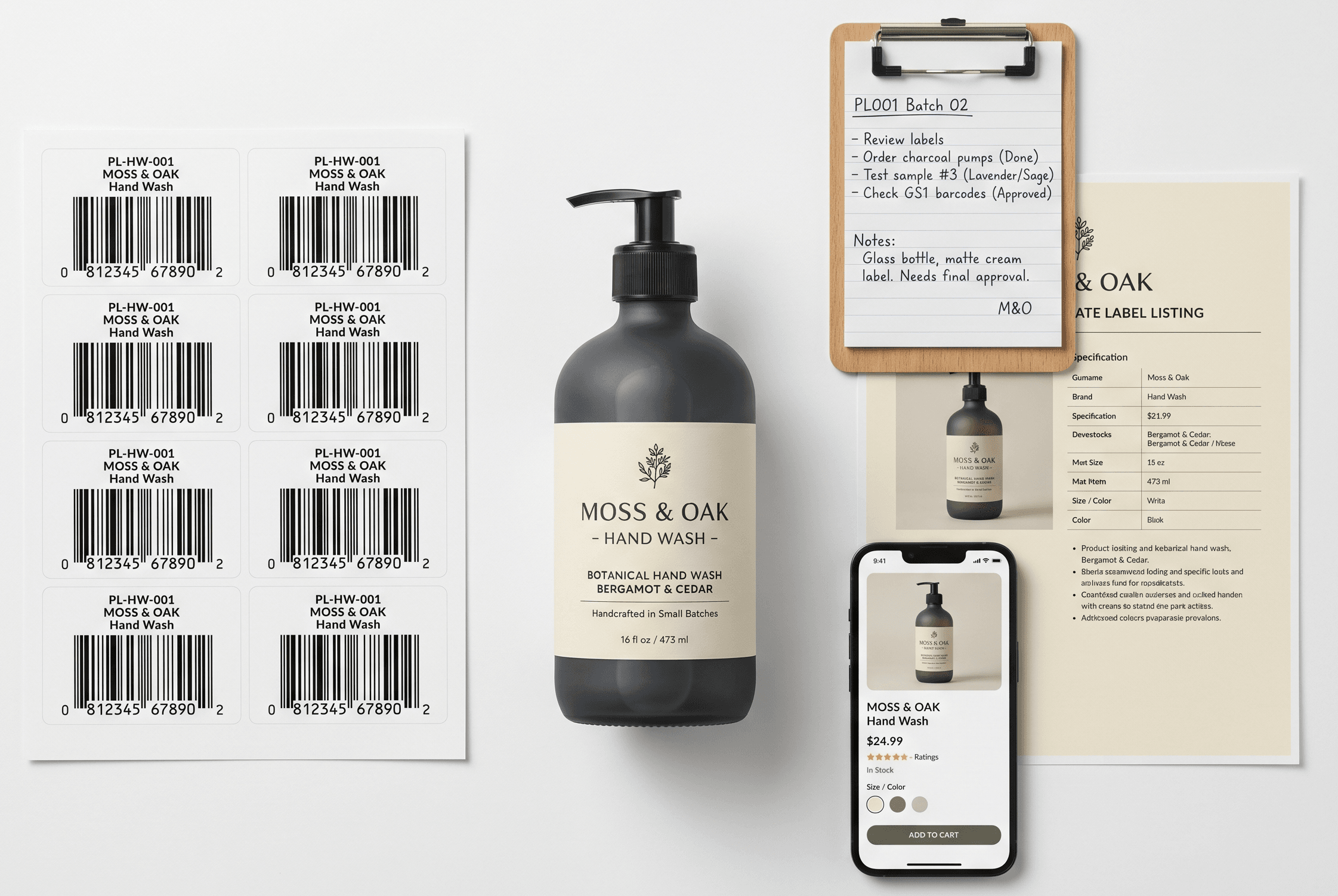
Seller Type and Platform Coverage
- New FBA sellers (US and Canada) — Account setup, category approval, first listing build, FBA inbound shipment, and the early decisions that determine how the account performs as the catalog grows.
- Existing FBA sellers (underperforming accounts) — Listing audit, suppression diagnosis, account health review, Buy Box recovery, and structural fixes to accounts that were set up incorrectly or have drifted over time.
- Private label brands — Brand Registry, A+ content, listing differentiation, catalog control, and the variation and catalog architecture that determines long-term visibility and conversion.
- Resellers — Category competition analysis, pricing strategy, Buy Box eligibility factors, and the sourcing and catalog decisions that affect margin at scale.
- Accounts with active policy flags or suspension — Account health issues and suspension situations are in scope. Include the details in the intake form and the engagement addresses them directly.
- Amazon sellers expanding to Walmart — Catalog migration, WFS setup, cross-channel pricing rules, and Walmart Marketplace consulting for sellers ready to expand beyond Amazon.
Scope First, Then Work
New account setup and existing account optimization are scoped differently. Both start with a free 15-minute intake call. Scope and price are confirmed before any work begins. Engagements are available as fixed-quote projects or as ongoing arrangements, depending on what the account needs.
As an Amazon FBA consultant and active seller since 2010, I have accounts in the US and Canada and have managed catalogs across gaming, electronics, toys, and household goods, with up to 500 SKUs in active rotation. The recommendations come from operating the same channels, not from managing accounts for someone else at arm's length.
I use current AI tools to optimize listings as part of my own selling practice. That same approach applies in consulting engagements, which means your listings are being reviewed with methods I use on accounts I have a direct stake in.
★★★★★
"Stuart at Kascadian did a fantastic job helping me set up my Amazon seller store with Amazon FBA for shipments. He was knowledgeable, patient, and made the whole process smooth and easy. I highly recommend his services!"
Mary — 5-star Google review — September 2024
Get Your Amazon FBA Strategy Right From the Start
Whether you are launching a new FBA account or fixing one that is not performing, the first step is a 15-minute call to confirm scope. No commitment required.
Operator to operator. No sales pitch.
Start the Conversation
Stuart reviews every request personally and responds within one business day.
Something went wrong. Email Stuart directly at [email protected].
Prefer to talk first? Book a 15-minute call →
Amazon FBA Consultant: Common Questions
FBA setup consulting is project-based and focused on getting the architecture right: account structure, listing quality, fulfillment setup, and the strategic decisions that determine how the account performs long-term. Account management is an ongoing operational service where someone else runs your Seller Central day to day.
An Amazon FBA consultant handles the project-based work: you leave with a correctly structured account and the knowledge to operate it, or with a clear scope of what needs to change in an existing account. Ongoing arrangements are available where the situation calls for it, but the starting point is always a scoped project, not an open-ended retainer.
Both. An Amazon FBA consultant who has operated across multiple categories and business models approaches private label and reseller accounts differently because the pressure points are different. Private label sellers typically need Brand Registry, A+ content, catalog control, and listing differentiation. Resellers are more focused on Buy Box eligibility, pricing strategy, and category competition analysis.
Private label has become the dominant model on Amazon, and the decisions around it have become significantly more complex. The platform rewards brand differentiation in ways it did not five years ago, and the sellers who understand that architecture win more consistently. The engagement is scoped to match whichever model you are operating.
Amazon is moving quickly to integrate AI into both the buyer-facing and seller-facing sides of the platform. The specific tools change often, but the underlying principle is consistent: listing quality is the input that feeds all of them. Titles, bullet points, attributes, descriptions, and Q&A content are what Amazon's systems read to determine relevance, discoverability, and how your products get surfaced to buyers.
Sellers whose listings were built for older search ranking models are increasingly at a disadvantage as the platform evolves. The consulting engagement covers listing optimization for both current search ranking and the AI-assisted discovery systems Amazon is actively deploying, using the same AI-assisted tools I apply to my own catalog.
Yes. Account suspension and active policy warnings are among the most disruptive situations an FBA seller faces, and they are more common than Amazon's documentation suggests. I have navigated suspension and reinstatement situations multiple times, and the approach matters significantly. Amazon's appeal process is specific, the timelines are real, and a poorly constructed Plan of Corrective Action makes the situation worse, not better.
If your account has active health flags or has been suspended, include the details in the intake form. The engagement will address the specific situation rather than applying a generic fix.
Yes. The FBA infrastructure you already have, including your catalog, Brand Registry enrollment, and fulfillment setup, is the starting point for a Walmart Marketplace expansion. I help FBA sellers evaluate the Walmart opportunity, migrate listings to Walmart format, and set up Walmart Fulfillment Services alongside their existing FBA operation.
Multi-channel coordination between Amazon and Walmart requires attention to pricing parity rules, inventory sync, and catalog formatting differences between the two platforms. This is covered in more detail on the Sell on Walmart Marketplace consulting page.
Want this analysis done for your category instead of learning another dashboard?
A Marketplace Snapshot is the same competitive picture, run for you on live Amazon and Google Shopping data and delivered as a report you can act on the same day. No subscription, no account access, no tool to learn.
- Price bands: floor, median, ceiling
- Seller and merchant landscape
- Rating and review benchmarks
- Weak-competitor candidates
- Prioritized recommendations
- Interactive report plus XLSX